
Do I hate men? Should I hate them?
The backlash against feminism is shifting from #NotAllMen to accusations of "man-hating". It's a revealing and useful change.

I’ve published a few pieces lately on holding men to account for the violence they commit, endorse or ignore. As much as I am irritated by the time-wasting work of deleting and blocking misogynist numpties in the comment sections, I did notice an interesting trend in the backlash. #NotAllMen used to dominate the response to feminist writing, but over the past few months I’ve seen a greater prevalence of the “you’re just a man-hater” narrative. I conducted an entirely unscientific (but reasonably thorough) review of manosphere accounts on Substack and saw the same trend in both content and comments. The attitude seems to be that women only become feminists because they hate men, so everything feminists say is not just wrong, it’s maliciously, egregiously, villainously wrong.
This is not to say that #NotAllMen has disappeared (it hasn’t) or that man-hater accusations are new (they’re not). It just appears, from what I’ve seen, that the man-hater response is now the go-to and #NotAllMen is less prominent.
The interesting thing about the man-hater complaint is that it has no follow-up. It’s just expected to stand alone as proof that all feminists are iniquitous and incorrect. This might be why #NotAllMen has fallen slightly out of favour, because implicit in the #NotAllMen argument is the concession that yes, some men. It always needed a follow-up so the commenter could align himself with the unimpeachable “good” men and distance himself from “bad” men. Most of the time, though, #NotAllMen seemed more personal, more like #NotME than a defence of all mankind. The sort of defence that might be rational if feminists were stepping up to each individual man, poking a finger into his chest and saying “you, my dude, are a rapist and I am here with my tiny groin-height guillotine to teach you a lesson”.
The “you just hate men” response to feminist analysis concedes no ground on the behaviour of some men. The statement alone is irrefutable evidence of dishonest intent and requires no follow up. There’s no concequence that occurs because of this hatred; the hatred itself is its own injury.
Where they do cite outcomes, one of the most common ones I saw was the apparent disadvantage men and boys experience in education. The evidence they cite is that women now outnumber men in early school leavers and university enrolments. This is true but it ignores the fact that most boys who leave school before the end of Year 12 go into the TAFE system and get trade qualifications. They are not disadvantaged by this, in fact quite the opposite1.
I saw a few claims that men are being pushed out of parliaments (Australian Federal Parliament is almost at parity – 49/51 across the two houses). There were also claims that feminism is pushing men out of jobs, which again, just doesn’t match the data2.
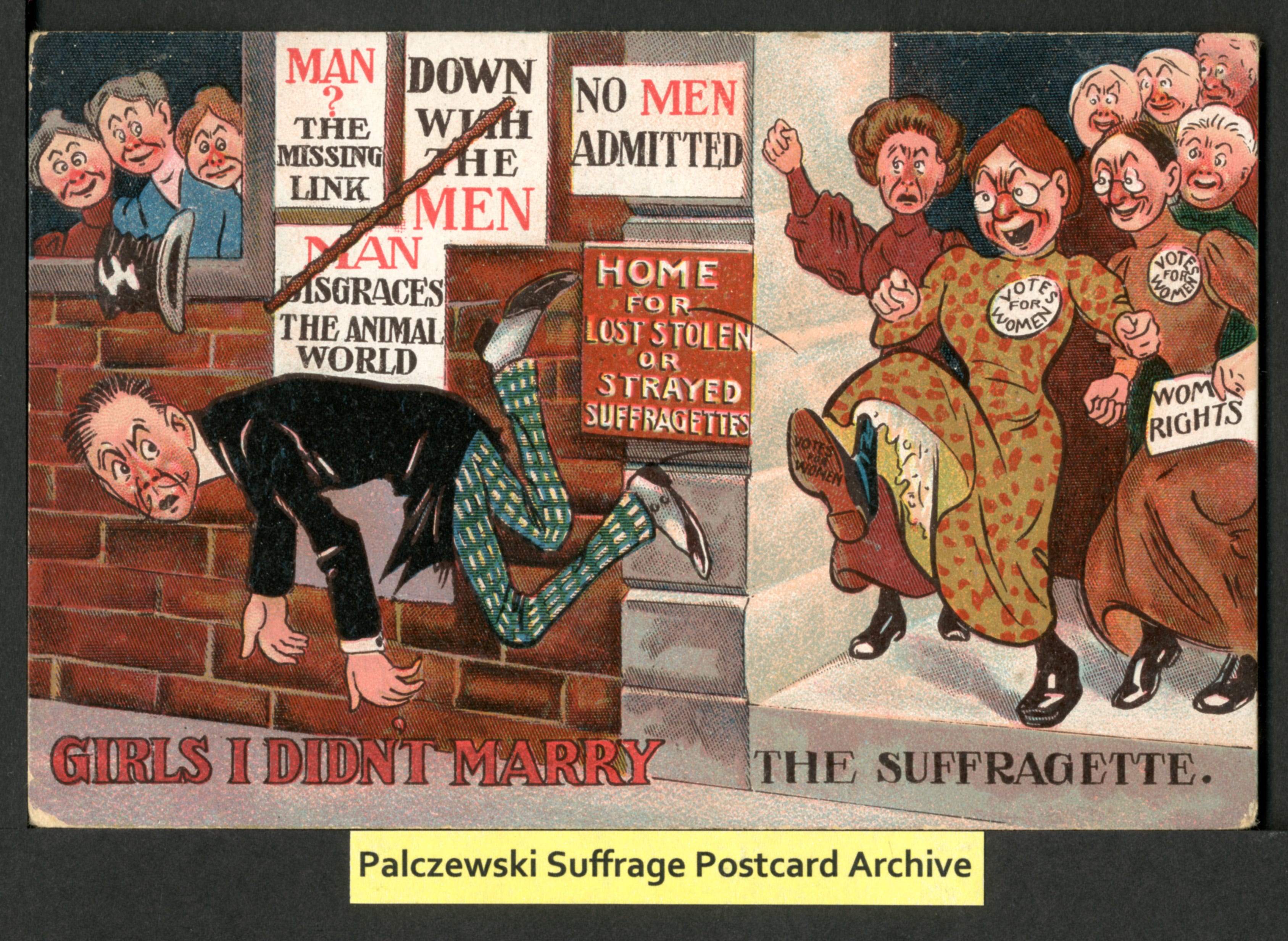
The manosphere is not a giant monolith of angry men yelling about how women shouldn’t have the right to vote or say no to a man (although this is a disturbing portion of it). Some of the men and women in the manosphere are calm, polite, even sympathetic in their discussions of how feminism is ruining the world for men. They lay out the data they’ve gathered, cite academic research and, if you don’t scratch the surface, they sound reasonable, rational and evidence-based. They cite Valerie Solanas3 as an illustration of how typical feminists feel about men, which is laughable but perhaps echoes the way feminists cite Andrew Tate as a typical example of the manosphere.
The crucial distinction, as many people have observed, is that unlike Valerie Solanas and almost no other feminists are advocating or inciting violence. Even if they do hate men, the result of this hatred is not systemic female violence against men. The outcome of misogyny is murder, rape, abuse, harassment, intimidation, and exclusion of women.
At the risk of belabouring a wearyingly repetitive point: feminism aims to liberate women from restrictions on their economic, physical, emotional and political safety. This only affects men who want to impose those restrictions. Men who happily share their safe access to the world have nothing to fear from feminists.
I realise that none of this will be persuasive for men who believe they are being persecuted by women’s movement toward liberation. Because they believe these persecutions are fuelled by hatred, they perceive their enemies as vicious, relentless, immoral and pernicious.
Do I hate men?
The Oxford English Dictionary defines hate as “To feel intense or passionate dislike towards (a person or thing); to feel strong animosity towards; to loathe, detest (opposed to love). In later use also in weakened sense: to dislike, regard with distaste.”
By that definition I can see why so many denizens of the manosphere believe feminists hate men. They think women lie about rape, domestic violence, the gender pay gap, political representation and educational disadvantage. They experience the plethora of evidence proving these things are real as just more proof that women lie vindictively and on a global scale. The more overwhelming that evidence becomes, the more they experience it as hatred, and the greater their efforts to fight back against an enemy they see as both implacable and powerful.
I spend a lot of time reading and analysing the research and data on men’s violence against women - I’m investing years of my life in a PhD investigating the motives of men who rape women - so it’s a fairly large chunk of my life. I’ve also been publishing on the topic for close to twenty years so I can see why they think I hate men. If believing the evidence and using it as the basis for advocacy is their definition of hating men then, yes, I do. I should.
But by the Oxford Dictionary’s definition, I don’t hate men. I can be exhausted, enraged, irritated, amused, frustrated, nauseated, horrified, disgusted or just generally fed up with the choices and actions of violent men, abusive men, wilfully ignorant men and hypocritical men. Sometimes I feel like there’s no hope for changing those men but that feeling doesn’t usually last and it’s not hatred, it’s hopelessness.
I don’t believe men are inherently, immutably violent. Monsters are made, not born. Even if there are individual men who cannot change, that cannot be true of an entire gender. Humanity’s greatest asset is adaptability. We adapt because we want to or because we must.
Women’s evidence and advocacy for change will be enough to make some men want to change. Others will only do it because they have no choice. A few will refuse to change no matter what the cost. Hope lies in focussing on the first two groups and accepting there is nothing to be done about the third.
So, we keep gathering the evidence and fuelling the advocacy. And we keep pushing to make the consequences for refusing to change too burdensome to resist.
This means ensuring the legal system cannot be manipulated to perpetuate men’s abuse of women. It means persistently debunking the myths that give men social protection from consequences for choosing violence, abuse, rape, and contempt of women as an agent of bonding with other men or shoring up their faltering self-worth. It means entrenching political, economic, educational, legal, medical and human rights as gender-blind not gender-dependent.
Some men will experience this as persecution driven by unreasoning hatred. They will almost certainly feel that way about me when I say I don’t care.
I guess that’s just the way it goes sometimes.
AI declaration: I do not use AI in any of my work. Not for writing, structure or research (although I do use ChatGPT occasionally to find research papers - the academic databases search engines are rubbish). Mostly I stay away because the few times I tried it the results were so incomplete and unreliable that it ended up being faster and better to do it myself. I’m told AI has improved significantly since then, but I’ve chosen to not explore this because I don’t want to be tempted away from the complex imperfection of my own thoughts, voice and analysis.
I have sometimes used AI to create images, and they are all labelled as such. Graphs and data are all my own work from spreadsheets I create myself and data I download from reliable sources such as the ABS.
This Substack is reader-supported. To receive new posts and support my work, consider becoming a free or paid subscriber.

Data on non-school qualifications (which includes all TAFE and university qualifications) shows a 49/51 gender split. Australian Bureau of Statistics data shows that men are more likely to be in paid work than women and men with three or more qualifications are paid 20% more than women with the same number of qualifications, while men with no qualifications are paid 24% more than women with none.
The employment rate for men was the same in 2022 as it was in 1978. Research by the Australian Institute of Family Studies found changes in men’s employment rates over time were linked to recessions, Covid, and declines in gendered labour markets such as mining and manufacturing – none of which are affected by feminism.
Valerie Solanas, author of the SCUM Manifesto, was an extreme radical feminist who advocated the violent elimination of all men. She shot two men (Andy Warhol and Mario Amaya) and said she wanted to kill them, but they both survived.
Thanks Jane - you are very skilled at pulling apart the tropes about women and feminist and showing them for what they are. Coordinated strategies to keep women firmly in their place, kneeling at the feet of the patriarchy.
"feminism aims to liberate women from restrictions on their economic, physical, emotional and political safety. This only affects men who want to impose those restrictions" and that is the crux of it all right there! Great article.